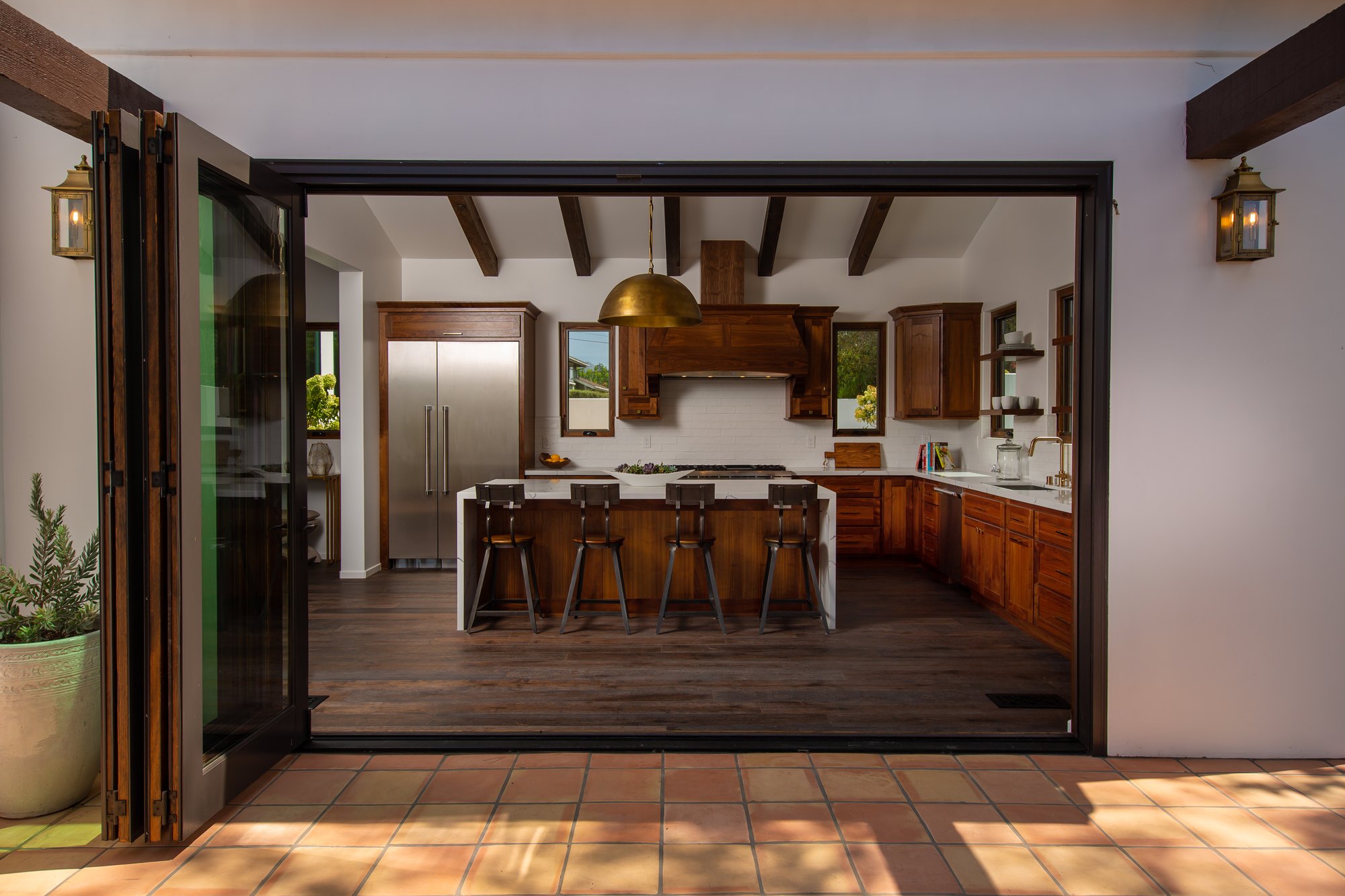


Yes, you can put screens on bifold doors. A standard hinged or sliding screen won't work, because the panels need room to fold and the opening is usually too wide. What works is a retractable screen: one built into the door frame that pulls across the opening when you want it and stores in a narrow housing at the side when you don't.
That matters, because the reason to install a bi-fold door is to open a whole wall to the outdoors. If insects come in every time you do it, the doors stay closed. This guide covers the screen types that work on bifold doors, how wide they go, and what to ask for before you order.
Why Bifold Doors Need a Different Kind of Screen

Three things rule out an ordinary screen door:
- The panels fold through the opening. A bi-fold folds either inward or outward and stacks at the side. A screen has to sit on the side the panels don't fold toward, or the two get in each other's way.
- The opening is wide. Bifold doors often span 12 to 20 feet, sometimes more. A single screen panel that size would be heavy, fragile, and hard to store.
- There's nothing in the middle. A bi-fold leaves a clear opening with no center post, so there's nowhere to land the edge of a pair of screen doors.
A retractable screen solves all three. It mounts in the frame on the side opposite the fold, spans the full width from a housing at the jamb, and disappears when you don't need it.
Your Screen Options for Bifold Doors
Pleated vs. Flat Roll: What Is the Best Screen for a Bifold Door?

Both types store at the edge of the opening and pull across it by a handle. The difference is how the mesh is held and how it looks.
- A pleated (accordion) screen folds into a tight stack, so the housing stays slim even on a very wide door. Braided cords run through the pleats to keep the mesh stable and the handle upright as it travels, and the screen stays wherever you leave it. Pleated screens handle the widest openings and suit doors that open often. On an AG Millworks door, the housing comes in black or white to match the frame.
- A flat roll screen rolls onto a roller hidden in the frame. With no pleats the mesh is a little less visible, so the view is clearer. A load-balancing mechanism lets it glide across the opening and stop at any point. Flat systems can also carry a shade in place of the mesh, or a screen and a shade together, which answers the other common question: what window covering works on a bi-fold door. A built-in shade filters sun and glare without curtains or blinds hanging in the way of the folding panels.
- Which should you choose? If the opening is very wide or you want the slimmest housing, go pleated. If you care most about a clear view, or you need shade on a sunny wall, go flat. A door specialist can tell you which fits your size and configuration.
Want the screen out of sight entirely? Ask for a pocketed screen. Normally the stored screen sits in a slim housing at the edge of the opening, a few inches wide. A pocketed screen retracts into a pocket built into the door jamb instead, so nothing shows when the doors are open. The pull handle stays at the edge of the pocket, where you can reach it.
How Wide Can a Bifold Door Screen Go?

Wider than most people expect. A single screen covers a typical bifold door, and two screens meeting in the middle cover very large openings. On AG Millworks doors:
- Pleated screens: up to 16 feet wide with one screen, or 32 feet with two screens (one from each side) meeting at the center, up to 10'6" tall
- Flat roll screens: up to 29'6" wide and 10'6" tall with two screens
- Screen and shade combo: up to about 13'11" wide and 9'6" tall
Flat systems come in four configurations: single (one screen across the opening), double (two screens that can meet anywhere along it), combo (a screen and a shade, each covering the full opening), and corner. The corner configuration matters for zero-corner bifold doors, where two door runs meet at 90 degrees with no post. The two screens close against each other at the corner, so the opening stays post-free.
Built In at the Factory vs. Added Later

How a screen is installed matters as much as which type you choose. A retractable screen has to sit square and true across the whole opening, or it will drag, gap, or let insects in at the edges.
When you add a screen to an AG Millworks door system, it is installed in the jamb at our factory while the door is being built. The door and screen ship as one unit that fits a single rough opening, so your installer sets one frame instead of fitting a screen on site. That saves installation time and takes guesswork out of the job.
A few things to know:
- Order the screen with the door. Our screens and shades are not sold separately from our door systems.
- Already have AG Millworks doors? Pleated screens can be retrofitted to existing AG Millworks door systems. Ask your dealer.
- Bifold doors from another maker? Look for an aftermarket retractable screen company that measures and installs on site, and ask how they handle the fold direction and the sill.
Do the Same Screens Work on Other Patio Doors?
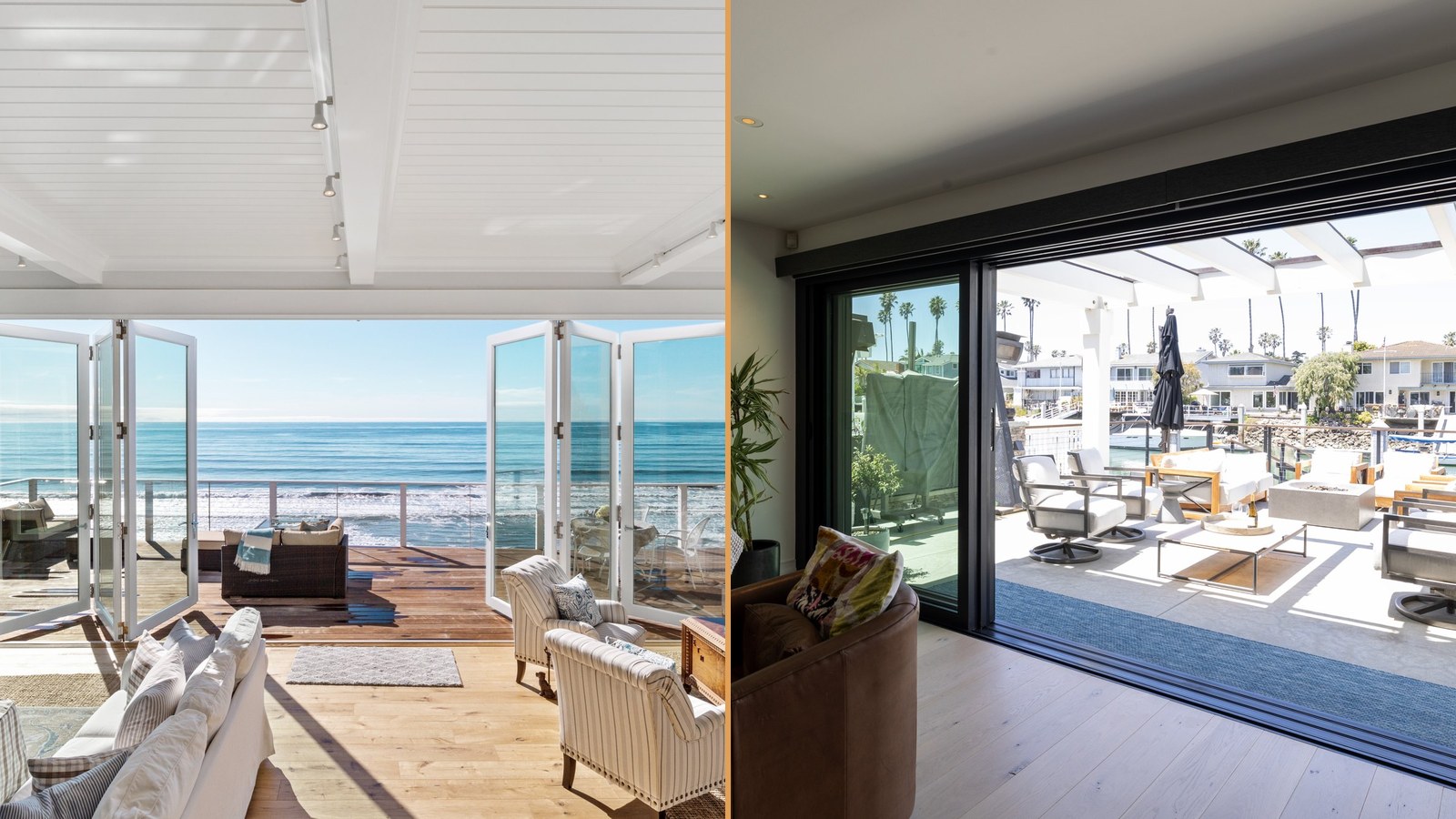
Yes. The same retractable screens fit our multi-slide doors, lift and slide doors, and French doors. Flat roll screens work with out-swing French doors, where the screen sits on the interior side. You'll find the options for each door type on our retractable screens page.
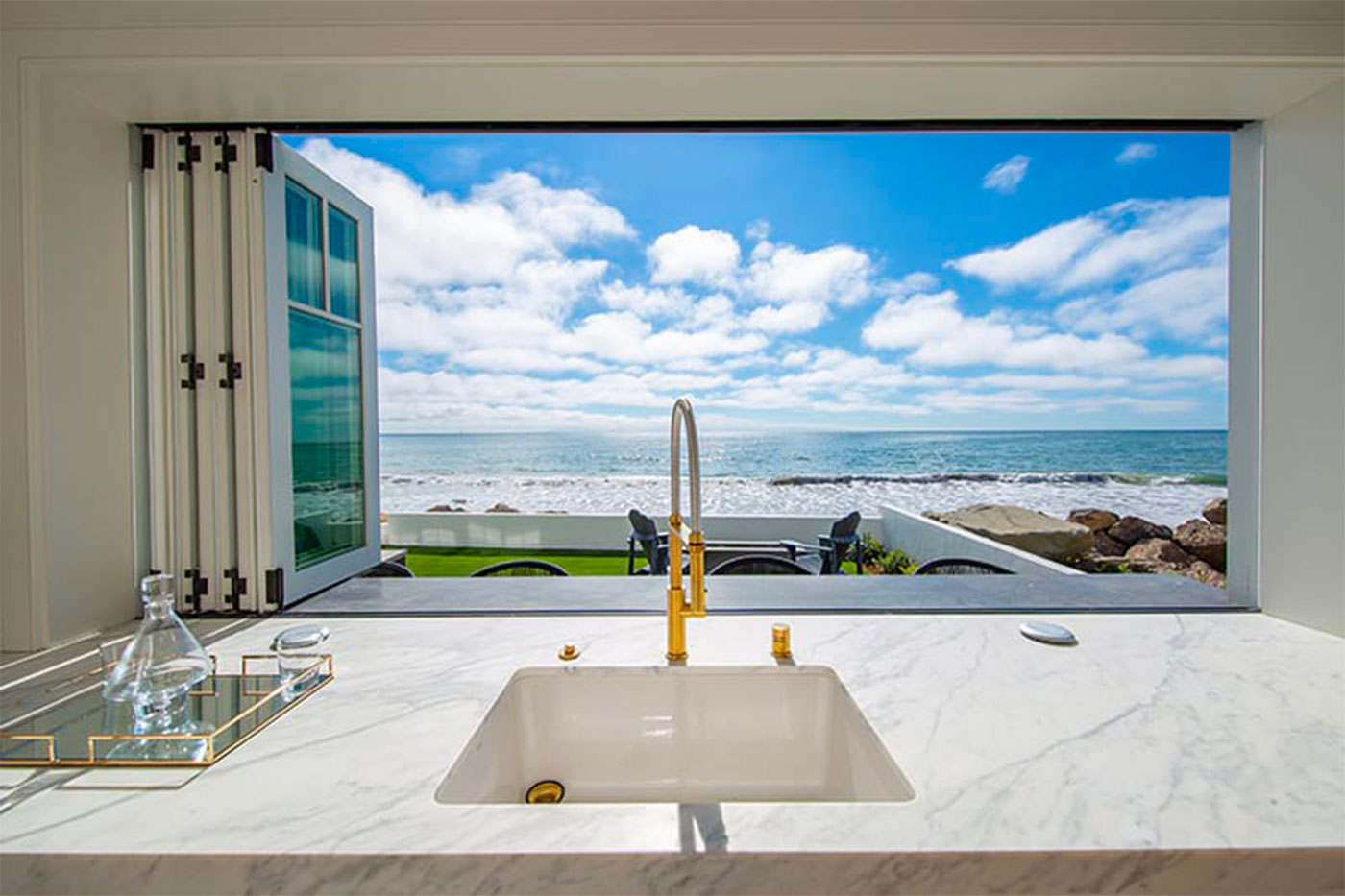
Screens also work on bi-fold windows, which is useful for a kitchen pass-through you want to leave open on warm evenings. Our kitchen pass-through window ideas show how that looks.
Caring for a Retractable Screen
Retractable screens need very little care:
- Keep the bottom track free of leaves, sand, and grit. A low-suction vacuum with a soft brush attachment does it.
- Dust the mesh now and then to remove dirt buildup.
- Open and close the screen by its handle, guiding it the whole way.
See our Door Care Guide for full care instructions.
Open the Wall Without Letting the Bugs In
A screen is what makes a wall of doors usable on an ordinary evening. Without one, the doors open for parties. With one, they open whenever the weather is good. If you're planning bi-fold doors or the ultra-slim Pico bi-fold, decide on the screen now so it can be built into the frame.
Ready to screen your opening? Request a quote →, find a dealer near you, or call 805-644-4494 to talk with a door specialist. Still choosing a door? Read Bi-Fold vs. Multi-Slide Patio Doors, or see how a screened opening works in a California room.